Table of Contents
Why AI-generated and one-off streetwear design quietly underperforms - and what a real streetwear graphic design process looks like, from the tee to the logo.
At some point in the last year, you probably did this: typed a product description into an AI image generator and got back something that looked cool enough on your phone screen, then sent it straight to print. Or you posted a $40 gig on a freelance marketplace for a custom streetwear design and shipped whatever came back, unedited.
Neither of those is design. It's generation and delivery. And the gap between "looks cool on a phone screen" and "actually sells, actually reorders, actually holds up as your brand grows" is where a lot of streetwear labels are quietly losing money on their streetwear shirt designs - and on the streetwear logo design that's supposed to tie every drop together.
Here's the direct answer, then the detail: cheap and AI-only streetwear designs tend to underperform for three concrete reasons. They look like every other brand's AI output, because the model is drawing from the training data your competitors are prompting too. They frequently fail at the print stage, because raster AI output isn't built for screen-print separations or embroidery digitizing. And nobody legally owns them cleanly - which becomes a real problem the moment a graphic streetwear shirt design starts working and you want to defend it.

The One-Prompt Streetwear Drop (And Why It Underperforms)
Here's what the cheap version of streetwear graphic design usually looks like, start to finish:
"Generate a graphic streetwear shirt design, urban aesthetic, bold typography, grunge texture."
That's the entire creative brief. No look at what's already saturating your category on Instagram and resale platforms. No decision about your brand's specific visual signature versus the next fifty labels prompting the same tool with the same words. No plan for how this single graphic sits next to your logo, your last drop, and your packaging as one connected brand.
The tool does exactly what it's asked: it averages everything it's seen tagged "streetwear designs" and hands back the middle of that average. That's why so much AI-generated streetwear tee shirts artwork shares the same tells - the same distressed-grunge texture applied to everything regardless of fit, the same stock urban typography, the same slightly-off proportions on a hand or a chain, the same look you've now seen on four other small labels this month.
What "Generation" Looks Like vs. Real Streetwear Design
Generation is a single prompt and a single output, judged only by whether it looks good on a screen. Real streetwear design starts with research into your specific niche, moves through a proper creative brief, and ends with a file built for the exact print method it's going on - not just a picture that happens to be shirt-shaped.
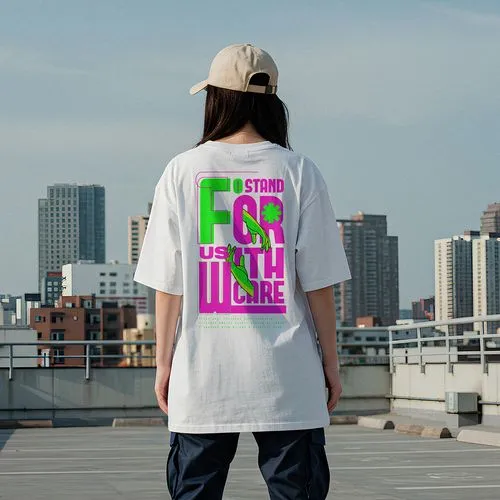
7 Questions To Ask About Your Current Streetwear Graphics
1. Does Your Graphic Look Like Your Brand, or Like "Streetwear" in General?
A one-line prompt can't know what makes your label different from the next one - it doesn't know your story, your city, your reference points. Without that input, it defaults to the category average for streetwear clothing design, and the category average is what every other prompt-only brand is also getting back.
2. Do You Own What You're Printing?
This is the one most brands skip past. As of 2026, the U.S. Copyright Office's stated position is that purely AI-generated output lacks the human authorship needed for copyright protection - meaning a custom distressed shirts design you generated and printed as-is may not be legally yours in the way you'd assume. On top of that, AI models are trained on existing artwork, so there's a documented risk of a generated streetwear shirt design landing too close to something already trademarked, especially with recognizable streetwear motifs and typography. Neither risk shows up until a design starts working and you want to protect it, scale it, or stop someone else copying it back.
3. Will It Actually Separate for Screen Printing?
AI image generators output raster files - flat pixel grids, not the layered vector art a print shop needs for clean color separations, halftones, or trapping. A graphic streetwear shirt design that looks perfect on-screen can come back from the printer with muddy color transitions, blown-out detail, or type that doesn't hold its edge, because nobody converted it into a print-ready file before it went to production.
4. Does It Hold Up at Embroidery Scale, If That's Part of Your Line?
Embroidery has its own constraints - stitch count, minimum detail size, limited color separation - that a flat AI-generated image was never built around. A streetwear logo that reads fine as a JPEG can turn into a blob of thread once it's digitized without someone adjusting the design for that medium first.
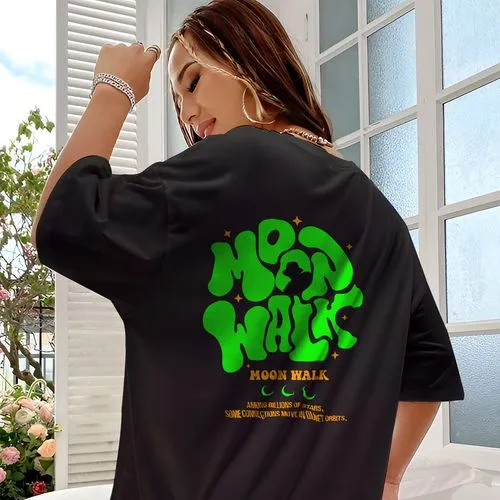
5. Does It Match the Rest of Your Drop, or Is It a One-Off?
A single strong graphic doesn't make a collection. If your streetwear shirt, your hoodie, your hangtag, and your Instagram grid all came from separate one-line prompts on separate days, they won't read as one brand - they'll read as four different brands that happen to ship together.
6. Do You Know Which Piece Actually Sold, and Why?
Ask whoever made your current streetwear designs one question: which piece from the last drop had the best sell-through, and what made it different from the ones that sat? Most can't answer, because nobody was tracking it. Design without a feedback loop is decoration, not strategy - you can't repeat a win you never identified.
7. Would It Survive a Trademark Check Before Your Next Bigger Print Run?
The stakes go up with scale. A generic AI graphic that was fine for a 20-unit test drop becomes a real liability at 500 units, in a retail partner's catalog, or in front of an investor doing basic diligence on your streetwear clothing brand logos and marks.
Streetwear Logo Design: The Same Problem, One Level Up
Everything above applies double to your logo. A tee graphic can change every drop - your logo is the one mark that has to survive every drop, every platform, and every print method for years. That makes cheap streetwear logo design the highest-stakes place to cut corners.
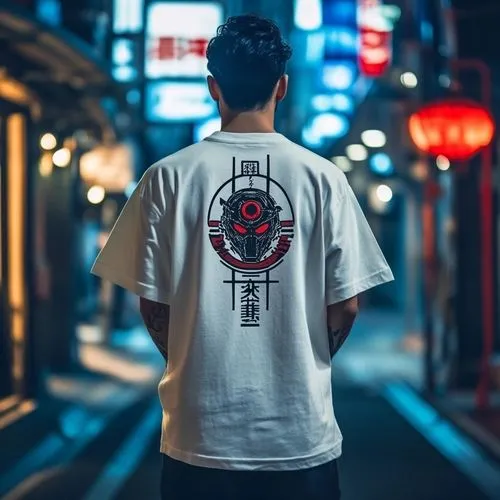
Why a Streetwear Logo Maker Isn't the Same as a Streetwear Graphic Designer
A streetwear logo maker tool is built for speed: pick a template, drop in your brand name, export a PNG. What it can't do is stress-test that mark the way a streetwear graphic designer would - checking how your streetwear logos hold up in a single color, at embroidery scale, reversed on a dark hoodie, or shrunk to a hangtag. A logo-maker output that looks fine at the size you designed it at can fall apart the moment it hits a different streetwear shirt design or product.
There's also the same ownership question as above: many logo-maker tools generate marks from shared template libraries or AI models, which raises the same authorship and trademark uncertainty as any other AI-generated graphic - a real risk for something meant to represent your streetwear clothing design for years, not one drop.
What a Real Streetwear Clothing Design System Needs From a Logo
A logo built to anchor a full streetwear clothing design system needs to work as more than one file: a full-color version, a single-color version for screen printing, a reversed version for dark garments, and a simplified version small enough for a hangtag or embroidery. Most streetwear brand logos that look "off" in production were only ever designed and tested as one version.
Quick Gut-Check: Is Your Logo Doing Its Job?
If you're short on streetwear logo ideas or unsure whether your current mark is working, ask three things: does it still read clearly at hangtag size, does it work in a single color, and does it look like it belongs to your brand specifically rather than to "streetwear" as a category? If the answer to any of those is no, that's a logo streetwear design gap worth fixing before your next print run, not after.
What Shoppers Notice Even When They Can't Name It
Fonts that drift between pieces in the same collection. A logo that looks slightly different on the hangtag than it does on the sleeve. A "grunge texture" that's clearly the same filter as three other brands they follow. None of these individually kill a sale - but together, across your streetwear shirt designs and your streetwear t shirt designs, they read as "not a real brand yet." Shoppers deep enough into streetwear to be your customer notice that instinctively, even if they couldn't explain why a piece felt off.

Forget "Was It Made With AI?" - Ask This Instead
The tool isn't the problem. The input is. So the more useful question about any streetwear design - including ours - isn't whether AI touched it anywhere in the process. It's: what did the person running the tool actually know before they started?
Did they know what's already saturating your specific niche right now? Did they know your brand's actual reference points, not just the word "streetwear"? Did they plan for how this piece prints - screen, DTF, embroidery - before generating it? Is there a plan for who owns the final file?
If the honest answer is "one sentence, no follow-up," the output is a guess dressed up as a finished design, however good it looks on a phone screen.
How a Real Streetwear Design Process Runs
Research
A look at what's already saturating your specific corner of streetwear, what your closest comparable brands are doing on their current drops, and what reads as fresh streetwear design ideas versus what's been done to death this year.
Concept
A real creative brief - your brand's specific reference points, the story behind this drop, and what makes your streetwear designs different from the last one and from everyone else's.
System
One visual language carried across every piece in the drop: streetwear shirt, hoodie, hangtag, packaging, and the social content announcing it - anchored by consistent streetwear brand logos, not four unrelated graphics that happen to ship in the same box.
Production
Every graphic built or converted into the actual file format it needs - vector art with clean separations for screen printing, digitized and stitch-tested for embroidery, checked at real print size, not just at phone-screen size.
Proof
Tracking which pieces in a drop actually sell through and get reordered, and carrying what works into the next collection instead of starting from zero every time.
FAQs
Can I use AI to design my streetwear graphics?
AI tools are a reasonable starting point for concepting, but raw AI output is rarely print-ready and carries real copyright uncertainty. A hybrid approach - AI for early ideas, a designer for execution, ownership, and print prep - tends to work better than either extreme alone.
Do I own the copyright on an AI-generated streetwear design?
As of 2026, the U.S. Copyright Office holds that purely AI-generated work lacks the human authorship required for copyright protection. Meaningful human creative edits can change that, but unedited AI output is legally shaky ground for something you're building a brand on.
Why do so many AI streetwear designs look the same?
AI image generators produce the statistical average of everything they've been trained on. Ask for "streetwear graphic design, urban, grunge" and you get the category average back - the same average every other brand prompting similar words is also getting.
What makes a graphic streetwear shirt design "print-ready"?
Vector artwork with clean color separations for screen printing, or a properly digitized file for embroidery - not a flat raster image straight out of an AI tool or a phone photo of a sketch.
What's the difference between streetwear logo design and a streetwear graphic?
A logo is your fixed brand mark, meant to stay consistent across every drop. A graphic is the specific artwork on an individual piece, which can change drop to drop while the streetwear logo anchors the brand underneath it.
How much should custom streetwear design cost?
Per-piece freelance pricing on marketplaces typically runs from around $50 for a simple concept to a few hundred dollars for detailed illustration work. Flat-rate subscription models replace that per-piece cost with one predictable monthly fee covering unlimited requests.
What is a distressed shirt design and how is it made?
A custom distressed shirts design uses deliberate texture, cracking, or faded effects to give a graphic a worn-in, vintage feel. Done well, it's built as its own layered element in the file, calibrated to survive the specific print method, not a one-click filter dropped over a clean graphic.
Should I use a streetwear logo maker or hire a designer?
A streetwear logo maker can work for a fast first pass, but it won't stress-test your mark across print methods, sizes, and backgrounds the way a streetwear graphic designer will - and template or AI-generated output carries the same ownership uncertainty covered above. For a mark you plan to build a brand around, that testing is worth doing once, properly.
How many designs does a streetwear brand need per drop?
There's no fixed number - a focused 3-5 piece capsule with one consistent visual system usually outperforms a scattered 15-piece drop where nothing relates to anything else.
How do I know if my streetwear brand needs a redesign?
If your streetwear clothing brand logos and graphics look generic rather than specific to your brand, if pieces in the same drop don't visually relate to each other, or if you can't say which past piece performed best and why, those are the three clearest signs.
Get Streetwear Design That Actually Sells - With Cueball Creatives
Everything above comes down to one choice: keep gambling on one-line prompts and $40 gigs, or put your streetwear graphic design and streetwear logo design in the hands of a process built to catch exactly what cheap and AI-only design misses.
That's the gap Cueball Creatives was built to close. Every streetwear shirt design, streetwear logo, and drop system we build goes through the same Research → Concept → System → Production → Proof process covered above - not a single prompt, not a rushed gig delivery.
Here's what that actually gets you:
- One dedicated designer, not a rotating cast of freelancers - your streetwear designs stay visually consistent from your first drop to your fiftieth.
- Unlimited requests and revisions on a flat monthly rate - no per-piece invoice, no per-logo quote, no surprise costs when a drop needs five graphics instead of one.
- Print-ready by default - every graphic streetwear shirt design is delivered as proper vector art with clean separations for screen printing, and digitized correctly for embroidery, not a raster file that falls apart at the printer.
- No contracts, cancel anytime - you're not locked into a single provider the way you would be with an in-house hire or a retainer agency.
- A logo system, not just a logo file - full-color, single-color, reversed, and small-scale versions of your streetwear logos, so your mark holds up on a hangtag the same way it does on a hoodie.
That's the difference between a custom streetwear design that looks fine on a phone screen and one that's actually built to sell, reorder, and scale with your brand.
See current tiers and what's included on the streetwear graphic design plan page, or compare it against the full lineup on the pricing page. Every plan includes print-ready file prep from day one - so what you get back is built for the printer, not just for the feed.
%20(1).webp)