Table of Contents
As of May 21, 2026, Amazon removed the old eligibility gate for Premium A+ Content - you no longer need a published Brand Story or five approved standard A+ submissions. Every Brand Registered seller now has access by default. Amazon credits well-built Premium A+ with up to a 20% sales lift, but access was never the hard part - a wider canvas and more module types just means more ways to get it wrong. This guide covers what changed, the real module specs, and how to design Premium A+ that earns the lift instead of just filling space.
What Changed on May 21, 2026
Amazon confirmed via Seller Central notifications that Premium A+ Content is now a default feature for every Brand Registered seller - no waiting period, no Brand Story prerequisite, no approval history required. For smaller brands that never had the bandwidth or submission history to unlock it, that gate is simply gone.
The catch nobody's talking about yet: when access is universal, execution is the only remaining differentiator. A wave of thrown-together Premium A+ content is about to hit the marketplace from sellers who finally have the tool but not the strategy - which is exactly the gap this guide (and a real design process) closes.
Standard A+ vs. Premium A+ Content: What's Actually Different
Do You Still Need a Brand Story Module?
Not for Premium A+ eligibility anymore - that requirement is gone. But strategically, yes, you still want one.
Think of your product page as three distinct zones now: your listing images make the functional case (what it is, what's in the box, dimensions), your Premium A+ modules make the product case (why this one, benefit by benefit), and your Brand Story module makes the brand case (who you are, why you exist) - now doing double duty as your primary cross-catalog merchandising tool since Amazon folded Shoppable Collections into it earlier this year. Keep the jobs separate. Cramming brand narrative into Premium A+ wastes the module Amazon built specifically for narrative.
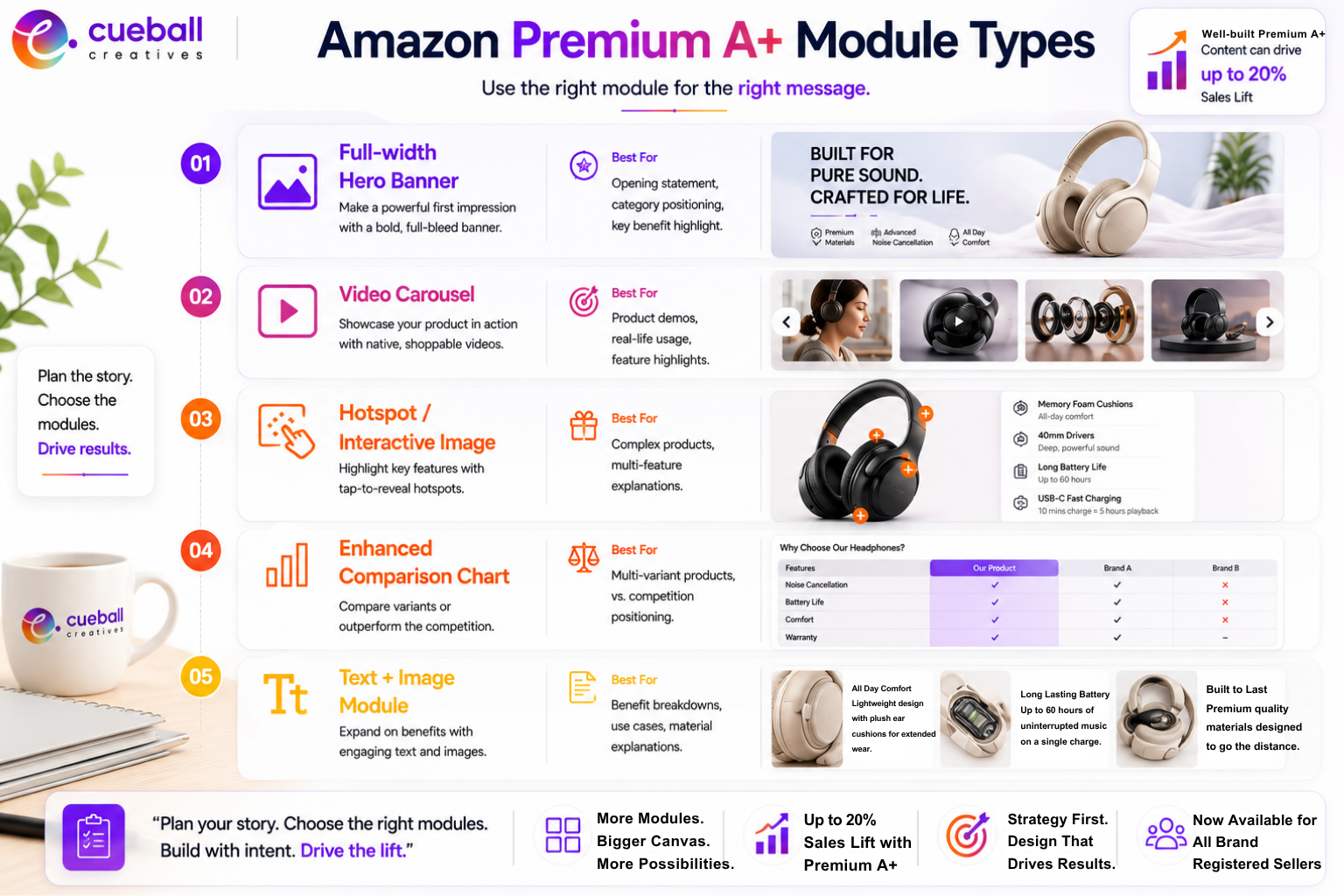
Premium A+ Module Types and What Each One Is Actually For
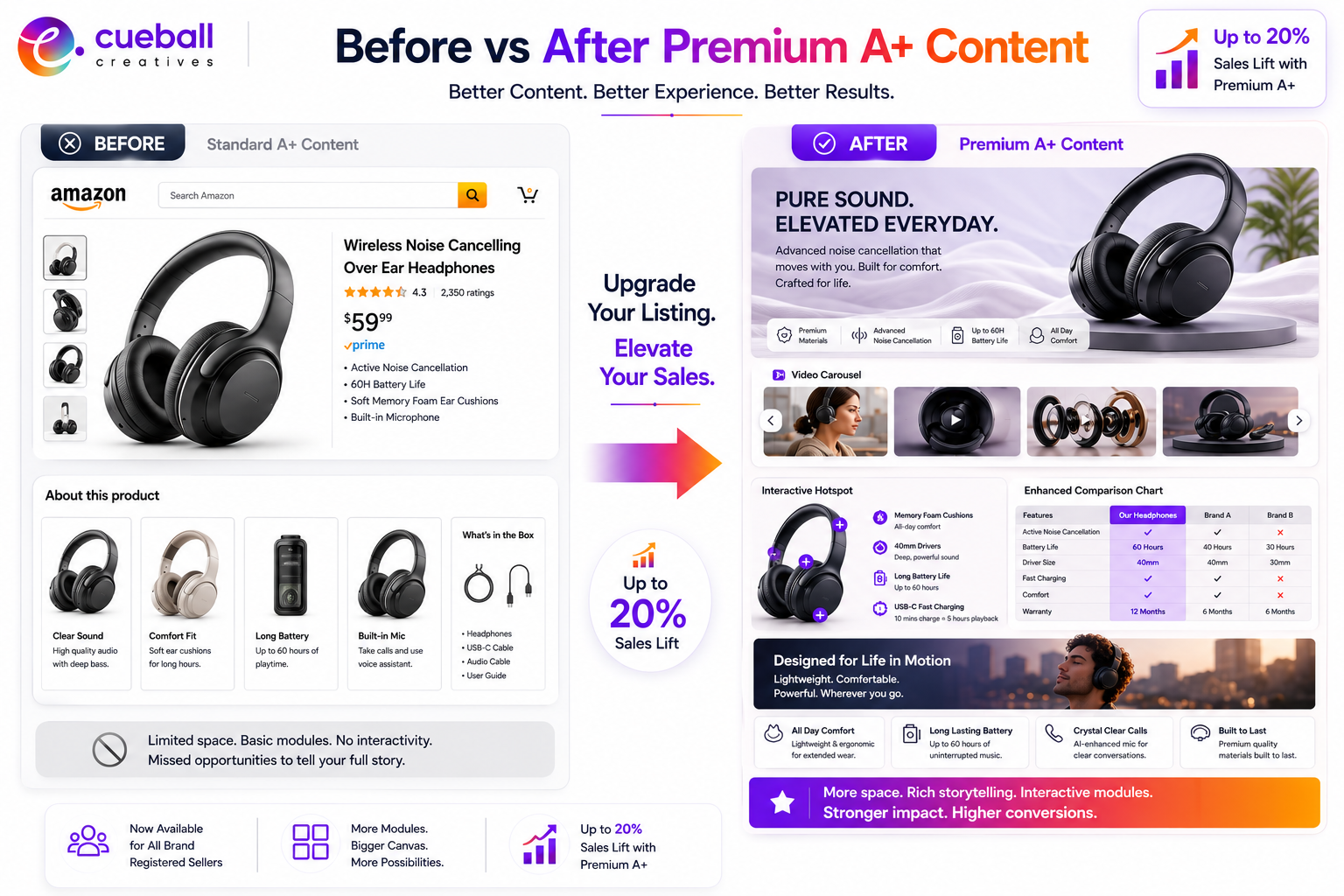
The Real Mistake: Filling Space Instead of Making an Argument
The most common failure mode with newly-unlocked Premium A+ isn't a design skill problem - it's a planning problem. Sellers open Seller Central, start dropping in modules because they're available, and stop once the page "looks full."
What that produces: disconnected image blocks with no throughline, modules that repeat what's already in the listing images instead of expanding on it, and a mobile experience that was never checked because the wider desktop canvas looked fine.
What actually works: plan the full module sequence before touching Seller Central - on one canvas, not module-by-module inside the tool. Decide what story needs telling that the listing images and Brand Story haven't already told. If a module doesn't add new information or move the shopper closer to a decision, cut it - extra modules with nothing new to say don't add credibility, they dilute it.
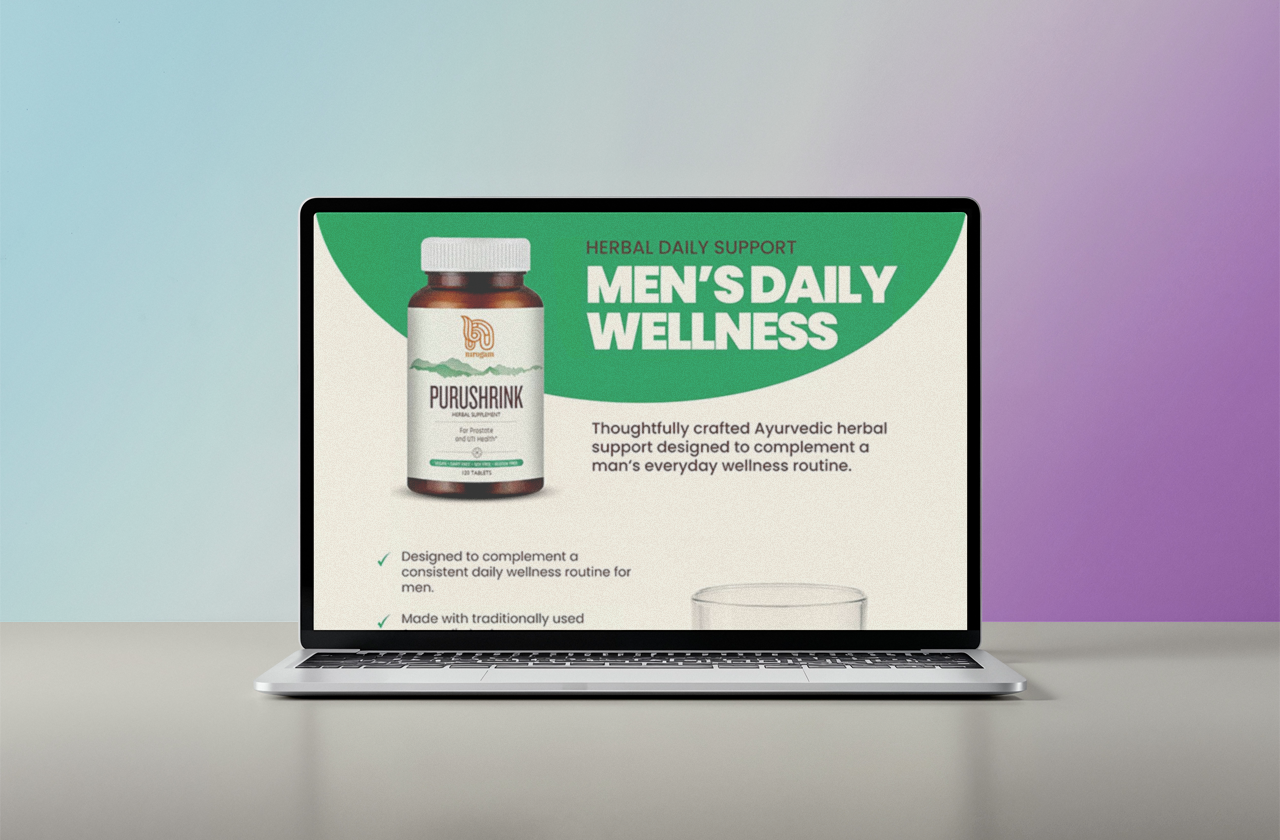
Premium A+ Content for Multi-SKU Catalogs and Agencies
If you're managing Premium A+ across a growing catalog - or across multiple client brands - the planning-before-building discipline matters even more. A visual system built once (color logic, module hierarchy, photography style) should scale across every SKU that qualifies, rather than treating each product's Premium A+ as a one-off brief. This is exactly where a dedicated Amazon design team earns its keep over a per-project freelancer: one system, applied consistently, instead of Premium A+ content that looks different from listing to listing.
FAQ
1. What is Amazon Premium A+ Content?
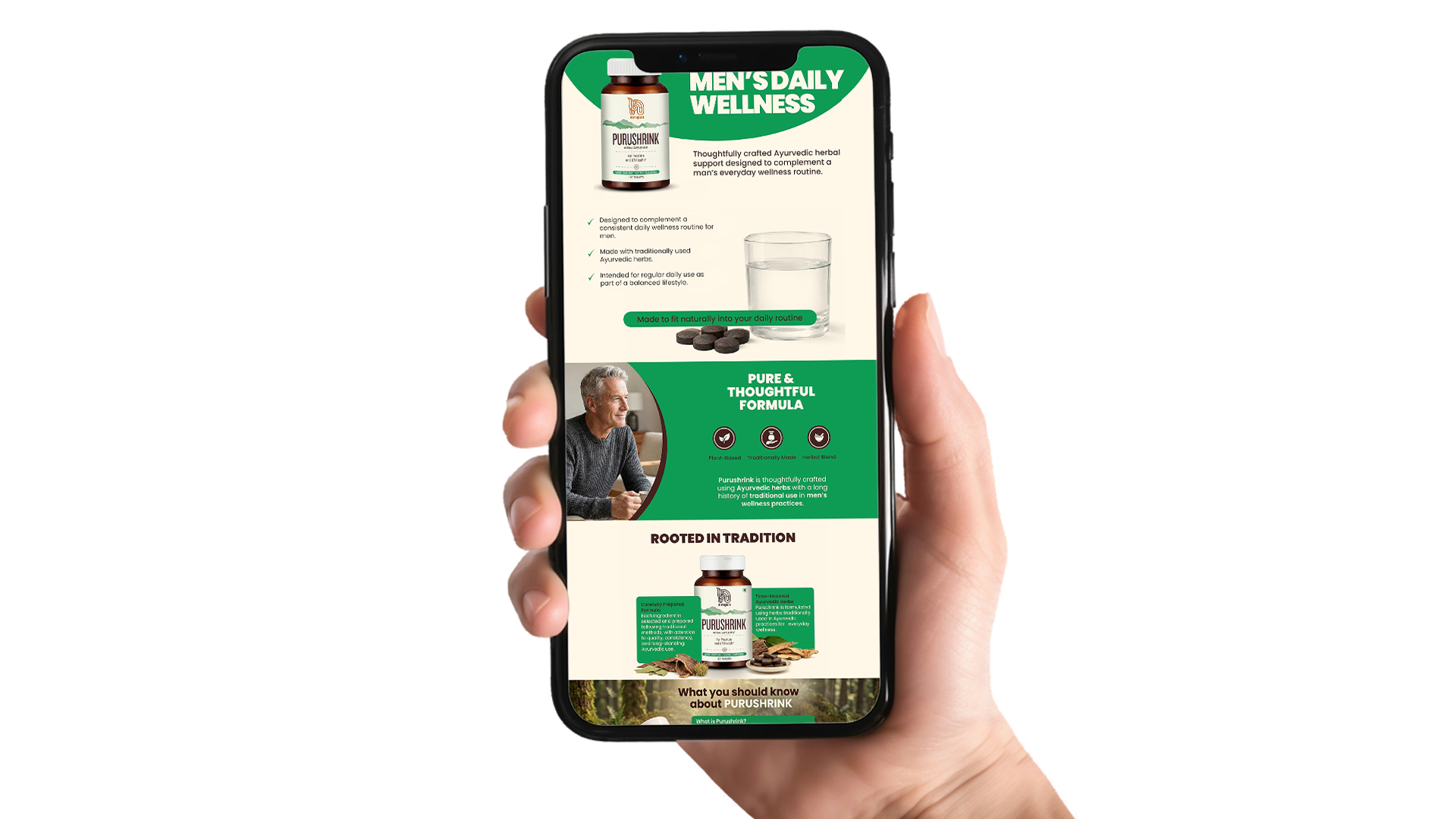
Amazon Premium A+ Content is an enhanced version of standard A+ Content, built for Brand Registered sellers who want a more immersive product page. It offers a wider canvas, up to 7 modules instead of 5, and adds module types Standard A+ doesn't have - video carousels, hotspot images, and full-width hero banners.
At Cueball, every Premium A+ module we design is built around your category's competitor gaps and your product's actual selling points, not a generic template - so the extra canvas space gets used to answer real shopper objections, not just fill space.
2. Who can access Amazon Premium A+ Content in 2026?
As of May 21, 2026, every Brand Registered seller has default access to Premium A+ Content. Amazon removed the old requirements - a published Brand Story and five approved Standard A+ submissions no longer gate access.
That means the barrier to entry is gone, but the execution bar hasn't moved. Access alone doesn't create a better listing; the module sequence, copy, and visual hierarchy still have to be built with intent.
3. Does Premium A+ Content actually increase Amazon sales?
Yes, when it's executed well. Amazon credits strong Premium A+ Content with up to a 20% sales lift, and Amazon's own data shows imagery and visual content drive roughly 65–70% of the purchase decision on a listing. Results depend heavily on execution - modules thrown together with no strategic sequence typically underperform.
We won't promise you a specific percentage, because that depends on your product, price point, and category. What we do guarantee is the work: A+ Content built on real competitor research and your category's winning angle, not a copy-paste layout.
4. Do I still need a Brand Story module if I already have Premium A+ access?
Yes. Premium A+ makes the case for a single product; Brand Story handles brand-level narrative and cross-catalog merchandising. This role became more central after Amazon folded Shoppable Collections into Brand Story in early 2026.
For multi-SKU catalogs, this is the module that gets shoppers who land on one listing to discover the rest of your range - which is why we treat it as a standing part of your Amazon design system, not a one-off add-on.
5. What's the actual difference between Standard and Premium A+ Content?
Premium A+ gives you a wider canvas, up to 7 modules versus Standard's 5, and adds video carousels, hotspot interactivity, and enhanced comparison charts - none of which Standard A+ supports.
In practice, the extra modules matter most for products with a longer consideration cycle - anything a shopper compares, researches, or needs convincing on before buying.
6. Can I build Premium A+ Content myself in Seller Central, or do I need a designer?
You can build it yourself - Amazon's Seller Central editor doesn't require design skills to use. But the wider canvas and extra module types create more ways to get the sequence wrong without a plan, and brands that map the full module flow before opening Seller Central consistently produce more cohesive, higher-converting pages than those building module-by-module inside the tool.
This is the gap Cueball fills: a dedicated Amazon designer plans your full A+ sequence - competitor research and copy included - before a single module gets built, so you're not troubleshooting layout decisions live in Seller Central.
7. Is Cueball's A+ Content AI-generated or built from a template?
No. Every A+ module is custom-designed by your dedicated Amazon designer around your specific product and category - not pulled from a template library. We use AI only where it sharpens the process, like competitor pattern-spotting or QC, never to mass-produce your visuals. You'll see the difference in the first task of your 7-day free trial, before you pay anything.
8. How long does it take to get Amazon A+ Content designed?
Standard turnaround is 12–48 hours per task. If you're working against a launch date or a Prime Day deadline, flag it at the briefing stage and we'll confirm upfront whether rush delivery is achievable.
9. What's included if I work with Cueball on Amazon A+ Content?
A dedicated Amazon designer, flat-rate monthly pricing, unlimited design requests and revisions, competitor research and Amazon-ready copy built into every module, and full ownership of the final files. Basic and Premium A+ Content are both covered, along with Brand Story, listing images, infographics, and Amazon video.
10. Do I need to write a detailed creative brief for A+ Content?
No. We bring the strategy: tearing down the competitors outranking you, setting your category's angle, and writing the module callouts and copy as part of the design. You send the product - we do the thinking, research, and writing. That's the core difference between Cueball and a pure execution/template service.
Ready to Build Premium A+ Content That Earns Its Lift?
Access just became equal for every seller. Execution is where brands separate now. Cueball's Amazon Design Plan includes A+ Content and Premium A+ design as part of your Catalog plan - planned as one system with your listing images, Brand Story, and storefront, not seven disconnected modules.
Book A Free Discovery Call → · View Amazon Design Plans & Pricing